
Apex Lean Muscle Recovery and Composition Calculator
Secretagogue Dose & Timeline Tracker
Select your compound, vial size, and daily dose — your syringe pull and 8-week timeline update instantly.
What you can expect
Loading…
What is this calculator?
This is a reference tool for researchers and professionals working with growth hormone secretagogue peptides. It calculates the precise syringe volume needed for a given daily dose, based on your vial size and reconstitution volume — removing any guesswork from the preparation process.
How to use it
Select the compound, vial size, reconstitution volume, and target daily dose from the four dropdowns. The calculator displays the exact unit marking to draw to on a standard U-100 insulin syringe, along with the concentration of your reconstituted solution in mg/mL.
What the bar chart is showing
The chart tracks four measurable markers that are directly relevant to lean muscle mass over a four-week reference period. Week 1 reflects the baseline — where the body is before the compounds begin to take effect. Week 2 shows the point at which cellular energy production starts to improve, meaning muscle cells have more fuel available for repair after training or physical stress. Week 3 is where nitrogen retention turns positive — this is the key marker for lean muscle growth, because a positive nitrogen balance means the body is building and holding onto more muscle protein than it is breaking down. Week 4 represents peak growth hormone pulse activity, which is the underlying driver of all of this — better recovery, improved body composition, and more efficient use of protein.
What happens after Week 4?
The four-week chart ends at peak activity, but the research picture beyond that point is important context. Growth hormone secretagogues do not cause the body to build tolerance in the way many other compounds do — the GHRH and ghrelin receptor pathways remain responsive with continued use. What published research documents from Week 5 onwards is a consolidation phase: lean muscle gains stabilise, fat metabolism continues at an elevated rate, and sleep quality — which is closely tied to natural GH release — tends to remain improved. The body essentially maintains the new hormonal environment rather than returning to baseline. Most research protocols observe this sustained response for the duration of the study period, which typically runs between 8 and 16 weeks. There is no sharp drop-off at Week 4 — the chart simply shows the initial build-up phase, which is where the most visible change occurs.
What these compounds actually do
CJC-1295 and Ipamorelin are synthetic peptides that work by prompting the body’s own pituitary gland to release more growth hormone. They do not introduce external hormones. The relevance to lean muscle mass is straightforward: growth hormone stimulates IGF-1 production in the liver, and IGF-1 is one of the body’s primary signals for muscle protein synthesis and fat metabolism. CJC-1295 activates the GHRH receptor to drive this process, while Ipamorelin amplifies the signal through a separate receptor pathway. Together they produce a stronger and more sustained growth hormone response than either compound alone — which is why the synergistic protocol shows a steeper curve on the chart. These compounds are sold strictly as reference standards for laboratory research purposes.
Apex Research & Titration Suite
Explore companion reference tools, recovery calculators, and metric dosing models.
Questions and Anwers
How do you reconstitute and convert CJC-1295 and Ipamorelin to U-100 syringe units?
Reconstituting a 5mg vial of CJC-1295 or Ipamorelin with 2.0 mL of bacteriostatic (BAC) water yields a concentration of 2.5 mg/mL (2,500 mcg/mL). On a standard U-100 1.0 mL insulin syringe, 1 unit equals 25 mcg. A standard research dose of 250 mcg equals exactly 10 units on the syringe barrel.
What is the optimal administration timing for CJC-1295 and Ipamorelin?
Growth hormone secretagogues should be scheduled either immediately before bed or post-workout on an empty stomach. Because ambient insulin spikes blunt the pituitary gland’s natural growth hormone pulse, protocols standardly require fasting for at least 90 to 120 minutes prior to administration.
How do CJC-1295 and Ipamorelin preserve lean mass during or after a GLP-1 weight loss cycle?
Rapid weight loss from GLP-1 agonists (such as Tirzepatide or Semaglutide) can result in up to 25–40% of total mass reduction coming from lean muscle tissue. Growth hormone-releasing peptides stimulate hepatic IGF-1 synthesis and elevate nitrogen retention, signaling muscle cells to maintain structural protein synthesis even during a caloric deficit.
How long does a 5mg vial of Ipamorelin last at standard research doses?
At a baseline reference schedule of 250 mcg per day, a 5mg (5,000 mcg) reconstituted vial provides exactly 20 daily doses. At an introductory schedule of 100 mcg per day, a 5mg vial lasts 50 days.
Technical Compound Profiles and Metabolic Signaling Data
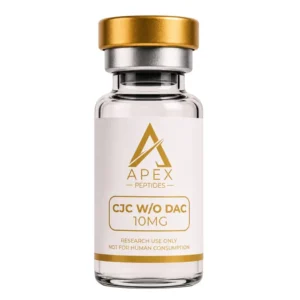
CJC-1295 Sequence Profile (Without DAC)
CJC-1295 is a synthetic analog of growth hormone-releasing hormone (GHRH). It operates by selectively stimulating the anterior pituitary gland to release natural growth hormone pulses without causing premature cortisol or prolactin spikes.
- Primary Metabolic Action: Constant binding to GHRH receptors to elevate plasma growth hormone and insulin-like growth factor 1 (IGF-1) tracking levels, supporting nitrogen retention and lean tissue preservation.
- Reconstitution Standard: Reconstituting a standard 5mg vial with 2.0 mL of bacteriostatic water creates a clean concentration of 2.5 mg/mL (250 mcg per 10 syringe units).
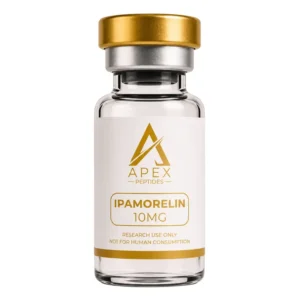
Ipamorelin Acetate Profile
Ipamorelin functions as a highly selective ghrelin receptor agonist and growth hormone secretagogue. It mimics natural pulse frequencies while completely bypassing the appetite-stimulation pathways commonly triggered by older generation compounds.
- Primary Metabolic Action: Synergizes alongside GHRH analogs to maximize the amplitude of growth hormone waves, accelerating post-workout muscle cell repair and supporting deep slow-wave sleep architecture.
- The Synergistic Rationale: Clinical reference indices show that pairing a GHRH analog with a GHRP analog triggers a synergistic surge in cellular repair velocity that is significantly more effective than utilizing either compound in isolation.
Protocol Accuracy and Scientific Verification
Required Legal and Laboratory Research Disclaimer